
Dog Life Simulator
Funcell Games Pvt LtdRole Playing
4.43.06K Reviews
- Version
- 5.9.8
- Installs
- 10.00M
- Age Rating
- Teen
Screenshots
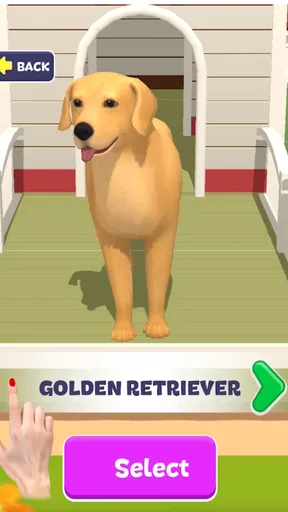
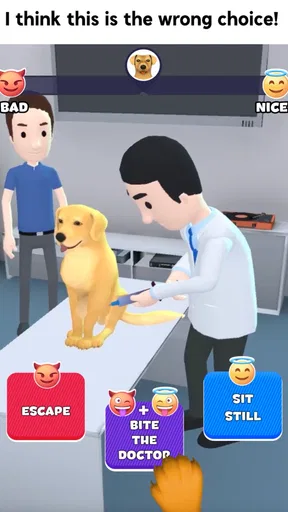
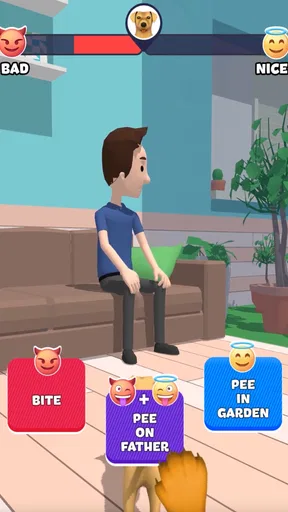
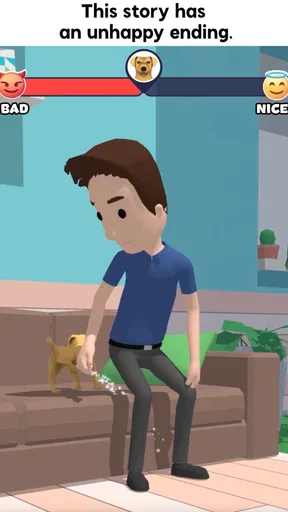

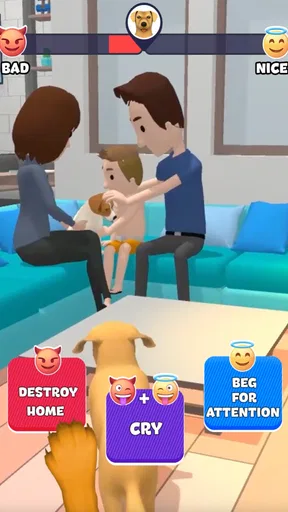
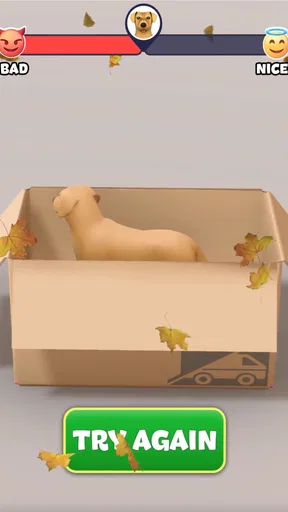
Our Review of Dog Life Simulator
 Analysis by Appyee
Playing Dog Life Simulator feels less like managing a traditional role-playing hero and more like trying to understand an ordinary day from a dog’s point of view. I spent time with it expecting a light animal-themed game, but its appeal comes from the way it turns familiar situations into small choices about behavior, attention, and survival. It is free to start, belongs to the role-playing category, and is made by Funcell Games Pvt Ltd. That combination makes it easy to try, although the experience is best approached as a casual simulator rather than a deep RPG with complex character builds.
The basic idea is immediately approachable: you take the role of a dog and experience the world through that animal’s perspective. The store summary calls it a game for animal lovers, but that description undersells the useful question behind the concept: how much of daily life changes when the player is no longer the person making all the decisions? I enjoyed that change of viewpoint because even simple actions can feel different when the goal is to behave like a dog instead of completing a conventional fantasy quest.
What the dog-life concept does differently
The game works best when I treated it as a short, playful role-playing experience rather than a serious simulation. There is a clear fantasy in becoming the animal that normally reacts to a household, a street, or a passing event. Instead of asking me to master a large ruleset, it invites me to think about what a dog might notice, want, or do next. That makes it approachable for players who enjoy character-driven games but do not want a long tutorial or a complicated combat system.
Its audience is broader than children, although the Teen content rating is worth taking seriously when choosing it for a younger player. Animal lovers will probably understand the premise fastest, while people who usually play life simulators may appreciate the unusual viewpoint. I would also recommend it to anyone looking for a game that can be picked up in short sessions. It has a more relaxed personality than a conventional role-playing adventure, and that is both its charm and its main limitation.
One useful way to play is to give yourself a small role before starting a session. I found the experience more interesting when I imagined a particular personality for the dog: curious, cautious, mischievous, or eager for attention. That personal rule changes how I judge the available situations and keeps the game from feeling like a sequence of disconnected taps. It is not a feature I would present as an official mode; it is simply a practical way to get more character out of the premise.
The perspective also creates a different kind of humor. Human routines become strange when viewed from the floor, and ordinary objects can seem important for reasons that have nothing to do with their practical value. That shift is more memorable than the usual “save the world” setup found in many role-playing games. At the same time, anyone expecting a detailed animal-care simulator, a realistic training tool, or a story-heavy adventure should lower those expectations before installing it.
How progress feels during normal play
Progress in this type of game is most enjoyable when I focused on the immediate situation instead of rushing toward an imagined end goal. The dog perspective encourages experimentation, but casual simulators can also create pressure to repeat actions when the player wants to move forward. I noticed that the game is more satisfying when I played in short bursts and accepted that not every session needed to produce a major change.
That approach matters because free games with optional purchases can affect how patiently a player experiences progress. Dog Life Simulator offers in-app purchases priced from $0.99 to $7.99 per item. Those are real spending points to keep in mind, especially if the game is being played on a shared device or by someone who tends to buy quickly when progress slows. I would begin without spending, learn the normal rhythm, and only consider a purchase after deciding whether the core loop is genuinely enjoyable.
I did not find a good reason to treat spending as a requirement for understanding the concept. The sensible test is simple: install it, play long enough to see whether the dog-life viewpoint holds your attention, and avoid buying anything during the first impression. If the central role-playing loop already feels repetitive without a purchase, spending is unlikely to solve the underlying issue. If the game is enjoyable and a particular optional item removes a nuisance, the decision becomes easier to judge on its own terms.
A practical everyday scenario would be playing during a short break, perhaps while waiting for an appointment or winding down before bed. I would choose one small aim for that session, such as exploring the dog’s situation carefully or making choices that fit the personality I had imagined. This prevents the game from becoming a hurried search for rewards. It also makes the experience easier to stop, which is useful for a casual title that may compete with more demanding games for attention.
Where the experience can create pressure
The main pressure is not the kind found in a competitive action game. It comes from the relationship between curiosity and progression. Once I wanted to see what happened next, any repeated task or interruption felt more noticeable. This is a common tension in simulation-style role-playing games: the fantasy is open-ended, but the player still wants a clear sense of movement. Dog Life Simulator is strongest when it lets the fantasy carry the session, and weaker when I judged it only by how quickly it delivered something new.
My advice is to avoid turning every available choice into a checklist. The dog theme works because it feels less formal than a standard quest log. If you play as though every moment must be optimized, the unusual perspective loses some of its warmth. On the other hand, players who need precise objectives, deep planning, or a highly efficient progression route may find the experience too loose.
Device compatibility is straightforward for many Android users because the game supports Android 7.0 and later. It was released on September 18, 2021, and the current version is 5.9.8. Those details matter when deciding whether an older phone or tablet is suitable. I would still leave enough storage and keep the operating system reasonably current, but I would not choose this game expecting a brand-new technical showcase simply because its version number has advanced.
Fairness, purchases, and the competitive question
Dog Life Simulator is not the kind of game I would select for serious competitive fairness. Its appeal is personal role-play, not proving that one player is more skilled than another. That makes the spending question different from the one raised by a competitive multiplayer title. A purchase may affect convenience or the pace of an individual experience, but the important test here is whether I still enjoy the dog scenario without paying.
There is no reason to assume that a purchase automatically makes the game unfair, and there is also no reason to assume that every optional item is good value. The confirmed price range tells me the game has several paid items, but it does not explain their exact contents or how they influence progress. I would therefore judge each purchase cautiously rather than treating the entire system as either generous or aggressive. The safest habit is to check the item description on the purchase screen and ask whether it adds enjoyment or merely reduces patience.
For families, spending controls are more important than competitive balance. Because the game is free to download but includes paid items, I would review the device’s purchase settings before handing it to a child or allowing unsupervised play. The Teen rating also means I would not assume that the game is automatically suitable for every younger player just because its subject is a dog. A parent should make the final decision based on the player’s age and comfort with the content.
The game’s popularity suggests that the concept has reached a substantial audience: it has an average rating of 4.4 from around 69 thousand ratings, with over 10 million installs. Those figures make it easier to see that the premise is not an obscure experiment, but popularity does not replace personal fit. I would use the rating as a reason to try it, not as proof that the pacing, humor, or purchase approach will suit me.
How it compares with familiar alternatives
Compared with a traditional role-playing game, this title appears more interested in perspective and everyday behavior than in elaborate combat, equipment planning, or a large fantasy world. If I want carefully balanced battles, a long narrative, or a character build that I can optimize for dozens of hours, I would choose a conventional RPG instead. Dog Life Simulator makes more sense when the role itself is the attraction.
Compared with a general life simulator, its dog identity gives the experience a clearer personality. A broad life game may offer more human activities and wider control, while this one narrows the viewpoint to an animal. That narrower focus can be refreshing because it gives the game a recognizable hook, but it also means that players looking for a complete household or relationship simulation may prefer another option.
It also differs from a pet-care game. Caring for a virtual animal usually puts the player in the owner’s position, managing the pet from outside. Here, the interesting decision is to inhabit the dog’s role. That distinction is important before downloading: if I want feeding routines, grooming, or detailed ownership responsibilities, I would check that another game offers those systems directly rather than assuming this title does.
One of the most useful trade-offs is depth versus accessibility. The dog viewpoint is easy to understand, and that helps the game feel welcoming. The same simplicity can leave experienced RPG players wanting more strategy. I would recommend it to someone who values an unusual premise and casual interaction over a dense progression tree; I would skip it for someone who measures every RPG by build variety and endgame complexity.
Questions worth answering before installing
The first question is whether it costs anything to begin. The game is free, so trying the basic experience does not require an upfront purchase. However, optional items range from $0.99 to $7.99 each, which means I would not describe the complete experience as entirely free of spending prompts. Starting without payment is the best way to learn whether the central idea works for you.
The second question is whether it suits a child. The subject is friendly to animal lovers, but the official age category is Teen. I would follow that rating instead of judging suitability from the dog theme alone. Parents should also remember that optional purchases can be made inside the game, so device-level controls and supervision are sensible.
The third question is whether an older Android device can run it. Android 7.0 is the minimum operating system, so devices below that requirement are not the right target. For compatible phones, I would install it with the expectation of a casual role-playing game rather than a demanding visual benchmark. Actual comfort will still depend on the device, available space, and how well it handles current apps.
The fourth question is whether it is worth paying for extras. My answer is to wait. Play without spending, identify the exact point at which an item seems useful, and then decide whether that item improves the role-playing experience rather than simply shortening a wait. Since the available purchase information gives the price range but not a complete explanation of every item’s effect, careful reading at the moment of purchase is more reliable than guessing.
The final question is who should avoid it. I would not choose it for a player seeking a highly competitive game, a realistic animal simulator, or a long-form RPG with intricate systems. I would also avoid recommending it to someone who dislikes optional purchases on principle, even though the game can be tried for free. Its best audience is more specific: people who enjoy playful simulations, unusual character viewpoints, and short sessions that do not demand constant optimization.
My trust verdict after weighing the trade-offs
What I trust about Dog Life Simulator is the clarity of its main idea. It knows that the dog perspective is the reason to open the game, and that is enough to make it stand apart from ordinary role-playing and life-simulation alternatives. I found it more appealing when I played slowly, invented a little personality for the dog, and treated each session as a small story rather than a race through content.
What keeps me cautious is the gap between a free starting point and the presence of paid items. The purchase range is visible, but the value of those items depends on how each one affects the individual experience. I would not spend automatically, and I would not recommend allowing unsupervised purchases. That is not a condemnation of the game; it is simply the responsible way to approach any free title that offers optional payments.
The 4.4 average and large install base make it a reasonable candidate for animal lovers who want to try something different, while the Teen rating, Android requirement, and current version help set practical expectations. Funcell Games Pvt Ltd has built a concept that is easy to explain and easy to sample. The question is not whether the premise is understandable; it is whether the unusual viewpoint remains enjoyable after the first curiosity fades.
My recommendation is to try it for free, keep spending off the table at first, and judge it as a playful dog-centered role-playing game rather than a full-scale RPG. If you enjoy making small choices from an animal’s perspective, it can provide a charming change from familiar human heroes and pet-owner simulators. If you need deep strategy, transparent progression, or a completely purchase-free experience, another game will probably serve you better.
Verdict
Strengths of Dog Life Simulator
- Fun choices create varied stories and outcomes.
- Simple controls make it easy for casual players.
- Covers many stages of a dog’s life.
- Lighthearted humor keeps the experience entertaining.
- Short sessions work well for quick mobile play.
Limitations of Dog Life Simulator
- Gameplay can become repetitive after several playthroughs.
- Some choices may feel too predictable or limited.
- Frequent ads can interrupt the flow for some players.
- Progression may feel shallow for experienced gamers.
- The cartoon style may not appeal to every player.
Similar Picks in This Category
View All
Hair Dye
CrazyLabs LTD4.4

Monster High™ Beauty Salon
CrazyLabs LTD4.5

Bus Simulator - Bus Games 3D
Jima Apps4.4

Flight Pilot: 3D Simulator
Wildlife Studios4.1


Super Stylist Fashion Makeover
CrazyLabs LTD4.4
Frequently Asked Questions
What is Dog Life Simulator?
Dog Life Simulator is a casual simulation game that lets you experience life from a dog’s perspective. You make choices as your dog grows, interact with people and other animals, explore different situations, and shape the character’s personality and future. The gameplay is designed to be simple, humorous, and accessible for short play sessions.
How do you play Dog Life Simulator?
The game is mainly controlled through taps and choice-based decisions. During different stages of your dog’s life, you select actions or responses that influence events and determine how the story develops. Some choices may affect relationships, happiness, behavior, or progress, so it is worth reading each option carefully rather than tapping randomly.
Is Dog Life Simulator free to download and play?
Dog Life Simulator can generally be downloaded without an upfront purchase, but the free experience may include advertisements, optional in-app purchases, or both. Depending on the version available for your device, some features, rewards, or conveniences may require payment. Check the store listing before downloading to review current pricing and purchase information.
Does Dog Life Simulator require an internet connection?
The core gameplay of Dog Life Simulator may work without a constant internet connection, which makes it suitable for playing while traveling or when Wi-Fi is unavailable. However, advertisements, purchases, updates, analytics, or certain online features can require connectivity. Availability may vary by device and game version, so offline functionality should not be assumed for every feature.
Is Dog Life Simulator suitable for children?
Dog Life Simulator is generally aimed at casual players and is easy to understand, but parents should still check the age rating and content description for the current version. The game may contain advertisements, optional purchases, humorous situations, or references that are not appropriate for every child. Parental controls are recommended when younger players use the app.
Play our best games!


